Holidays to Apulia
Top destinations in Apulia
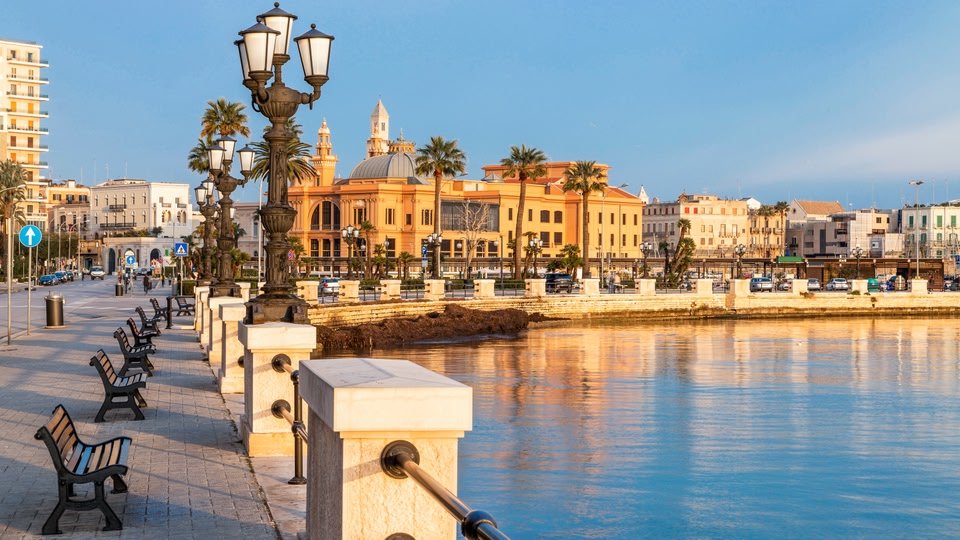
Bari
You’ll find heaps of charm in the southern port city of Bari, where cobblestone streets lead to bustling squares, medieval ruins and ornate cathedrals.

Brindisi
Tucked in the heel of Italy’s boot, the seaside town of Brindisi has a 2,000-year legacy. Explore its Roman port and Baroque churches, then sit down for the seafood feast of your life.
Apulia: fast facts
| Language | Italian |
|---|---|
| Currency | Euro (€) |
| Time zone | Bari - UTC+1 (CET) and UTC+2 (CEST) |
| High season | June – September |
| Low season | November – March |
Apulia holiday highlights
Explore fairy-tale villages
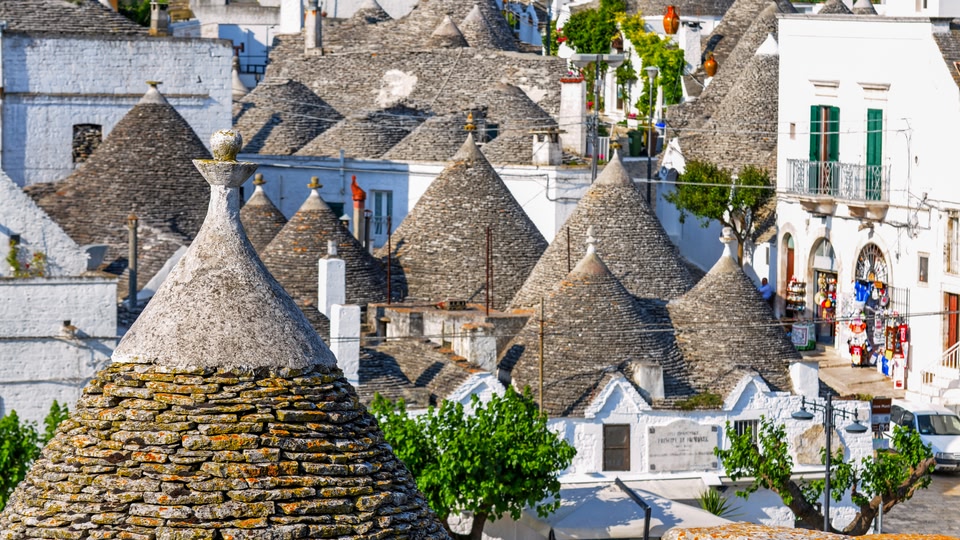
The famous ‘trulli’ (stone houses with cone-shaped roofs) are among the most iconic things to see in Puglia. The charming village of Alberobello has over 1,000, with some dating back to the 14th century. Nearby, Martina Franca boasts medieval walls and Baroque churches, while the ‘white city’ of Ostuni dazzles with its sun-bleached buildings and sweeping Adriatic views.
Take a scenic drive
Puglia’s rolling hills and winding roads were made for scenic drives. One of the best routes is the 47-kilometre coastal drive from Otranto to Santa Maria di Leuca, passing lighthouses, castles and quaint villages. Along the way, explore the Zinzulusa Cave and its otherworldly rock formations. Or cruise through the Itria Valley for vineyards and farmlands studded with classic trulli houses.
Feast on local food
Puglia has a rich farming heritage. The region churns out nearly half of Italy’s olive oil and is a major producer of the country’s bread and pasta. To feast on farm-to-table fare and pick up local cooking skills, stay at a traditional ‘masseria’ (farmhouse). Or take a tour of one of Puglia’s historic olive groves to see how the prized ‘green gold’ is made.
Things to do in Apulia
Top attractions
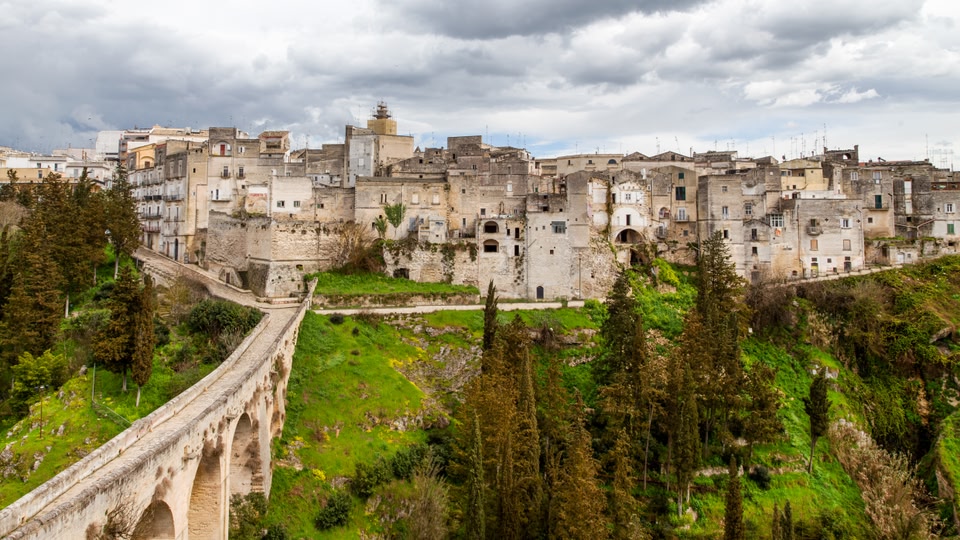
Looking as if it were plucked from a fairy tale, the fascinating ‘trulli’ houses of Alberobello are a must-visit — stay overnight to explore without the crowds. To discover more of Puglia’s medieval history, get an audio guide and stroll through the ornate arches and tunnels of Castel del Monte. And for a deep dive into Puglia’s rich geology, check out the Grotte di Castellana caves.
Beaches
Bordered by the Adriatic and Ionian Seas, Puglia spoils you with stunning beaches. Torre dell'Orso might just be the best, with its sparkling white sand that looks out to the famous ‘Le Due Sorelle’ (The Two Sisters) sea stack. Porto Selvaggio is a peaceful cove surrounded by pine forest, and the clifftop village of Polignano a Mare leads down to one of Puglia’s most scenic beaches.
Nature
Gargano National Park is Puglia’s green jewel, home to the region’s last ancient forests. Hike beneath a canopy of oak and beech, then explore white limestone cliffs and hidden caves. Don’t miss the Tremiti Islands, a gorgeous archipelago with dense forests and secret beaches. For seabirds, turtles and marine life, check out the Torre Guaceto Nature Reserve.
Cuisine
Classic Puglian staples include ‘orecchiette’, an ear-shaped pasta often served with bitter greens, chilli, garlic and olive oil. Look out for creamy burrata cheese and ‘panzerotti’, deep-fried dough pockets filled with mozzarella and tomato. The restaurants in Puglia celebrate seasonal ingredients and home-style cooking. And whether you’re dining at a Michelin-starred institution or family-run trattoria, local produce always reigns supreme.
Culture and museums
One of the top museums in Puglia is the Archaeological Museum of Castro, a 12th-century castle displaying thousands of years of archaeological finds. Take the audio tour of Castel del Monte, a medieval hilltop fort known for its octagonal shape. Another cultural hotspot you shouldn’t miss is Lecce, nicknamed the ‘Florence of the South’ for its Baroque buildings of golden stone.
Nightlife
For some of the best nightlife in Puglia, head to Gallipoli, home to beach parties and sets from world-renowned DJs. In Bari, you’ll find sophisticated wine bars and speakeasies in the Umbertino Quarter or a lively scene in the waterside Torre Quetta neighbourhood. Theatre fans should see what’s playing at Bari’s Teatro Petruzzelli or Lecce’s Teatro Politeama Greco.
Find the best time to visit Apulia
Weather in Apulia through the year
March – May: Spring offers mild to warm temperatures, peaking at around 25°C in May. Keep your eyes peeled for pink and white almond blossoms in the countryside.
June – August: Summer is the best time to visit Puglia for beach days, aperitivo hours and leisurely evenings at al fresco restaurants. The sun can be intense, so find some shade and stay hydrated.
September – November: Puglia dazzles in autumn, with golden leaves, seasonal produce and warm weather lingering well into October. Pack an umbrella, as showers are common.
December – February: The off-season has its own magic in Puglia. Enjoy historical and cultural attractions without the crowds, and get stuck into festive celebrations. Expect temperatures below 13°C.
Events in Apulia
Carnevale di Putignano (February to March): This colourful parade sees costumed performers, traditional masks and towering paper-mache floats take to the streets of Putignano.
Conversano Cherry Festival (May to June): The town of Conversano honours its prized ‘red gold’ with cherry-infused sweets, jams and traditional delicacies, plus live music and street performances.
Locus Festival (July): International stars join homegrown talent at this popular music festival in Locorotondo, which is widely recognised as one of the prettiest villages in Puglia.
Notte della Taranta (August): A joyous celebration of Salento’s folk music heritage with traditional ‘pizzica’ dancing and plenty of tambourines. Events are held throughout the Lecce province, ending with a big concert in Melpignano.
Know before you go
Budget
This underrated region is more budget-friendly than many of Italy’s tourist hotspots, making a cheap holiday to Puglia fairly easy to pull off. You can have a cheap dinner for around 15 euros (€) and a local beer for less than €4. Your morning cappuccino will cost about €2.
Health and safety
Heatwaves are becoming more common in Puglia. Stay safe by drinking plenty of water, limiting sun exposure and booking air-conditioned rooms. There is also an increasing risk of wildfires in natural areas, so check local alerts before you go. For emergencies, call 112 from any phone. Note that some rural areas have limited medical facilities.
Free things to do
It doesn’t cost a single euro to explore Gargano National Park’s scenic hiking trails, which range from short, accessible walks to all-day excursions. Or to take in the stunning Baroque buildings of Lecce, many of which are found at the Piazza del Duomo. Visiting Bari? Get a rundown of the city’s highlights with walking tours each morning from Piazza Mercantile.
Family friendly
Puglia offers family fun at every turn, from kid-friendly beaches like Torre Lapillo to excursions like dolphin watching at Taranto. For dinosaur lovers, don’t miss the palaeontology museum in San Marco, which features giant replica skeletons and fossilised footprints. Foodies young and old should look out for family-friendly cooking classes in Lecce and Ostuni or tour a local ‘masseria’ (Puglian farmhouse).
Getting around Apulia
Public transport
Buses: Buses are a good option for short journeys between local towns. Just note that services in rural areas may be infrequent. Buy tickets at ‘tabacchi’ (convenience stores), and don’t forget to validate them onboard.
Trains: Rail service in southern Italy isn’t as extensive as in the north, but it’s a convenient way to travel between major cities like Bari, Lecce and Brindisi. Schedules can vary, so it’s best to check times and book tickets in advance using the Trenitalia app.
Boats: Catch a ferry from Termoli to the Tremiti Islands for off-the-radar beaches and pine-shaded hiking trails. Or head to the port towns of Bari or Brindisi for passenger services to Greece, Albania and Croatia.
Domestic flights
Puglia has two main airports, Bari and Brindisi. Most travellers fly into one of these hubs and then hire a car. But in general, domestic flights aren’t necessary in this small region.
Driving and car hire
Hiring a car is the easiest way to explore Puglia at your own pace. Choose a small vehicle to handle narrow roads and tight parking spots. Skip driving in city centres, which are mostly car-free and marked with ‘zona a traffico limitato’ signs. Take your time — Puglia’s charming villages and coastal roads are best enjoyed slowly.