Your guide to Svalbard
Top destinations in Svalbard

Longyearbyen
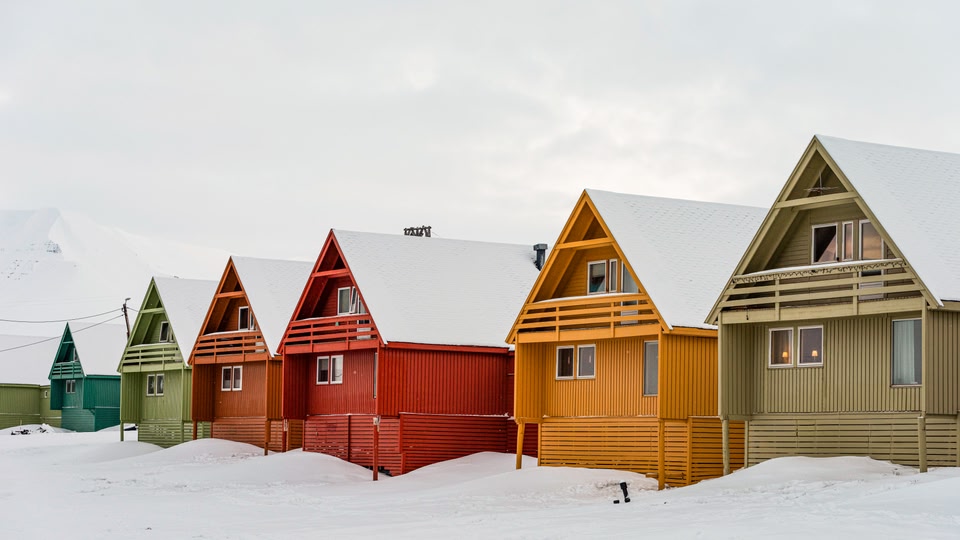
Experience polar Norway in Longyearbyen, the main hub of the Svalbard archipelago. It’s the perfect base for glacier tours, dog sledding and viewing the Northern Lights.
Svalbard: fast facts
| Language | Norwegian |
|---|---|
| Currency | Norwegian krone (kr) |
| Time zone | Longyearbyen - UTC+1 (CET) and UTC+2 (CEST) |
| High season | June – August; February – May |
| Low season | October – January |
Svalbard highlights
Cruise through icy fjords
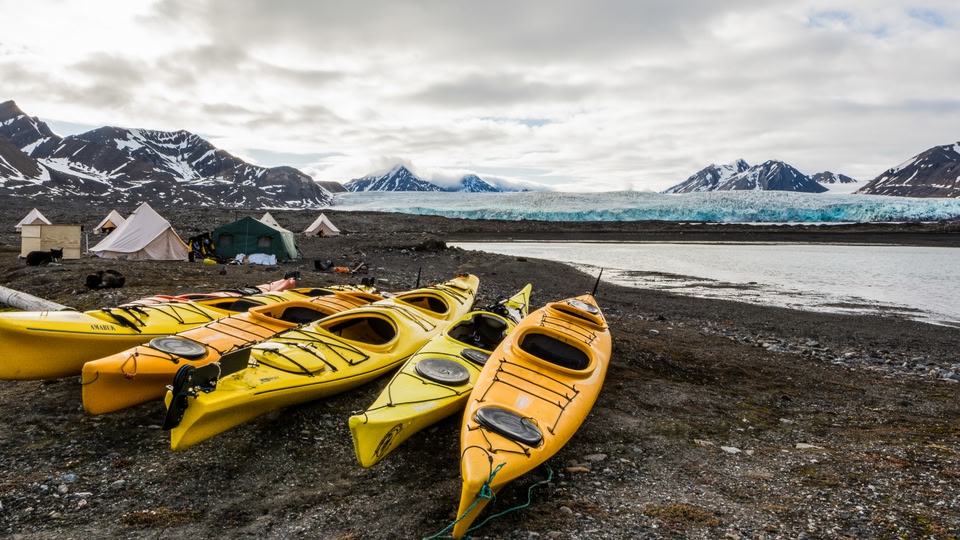
One of the best things to do in Svalbard is to take a boat tour deep into the archipelago’s untouched landscapes. Trips range from whale and walrus safaris to sunset dinner cruises, with most leaving from Svalbard’s main town, Longyearbyen. For a total wilderness immersion, opt for a multi-day trip with glacier hikes and stays at remote lodges.
Experience endless daylight
Svalbard’s seasons offer immense contrasts. Between April and August, the ‘Midnight Sun’ bathes the archipelago in endless daylight. This surreal phenomenon gives you extra time for outdoor adventures like hiking, kayaking and wildlife safaris. From November to January, the region enters the ‘Polar Night’, when the sun never rises, and you might spot the Northern Lights at any time.
Get an adrenaline rush
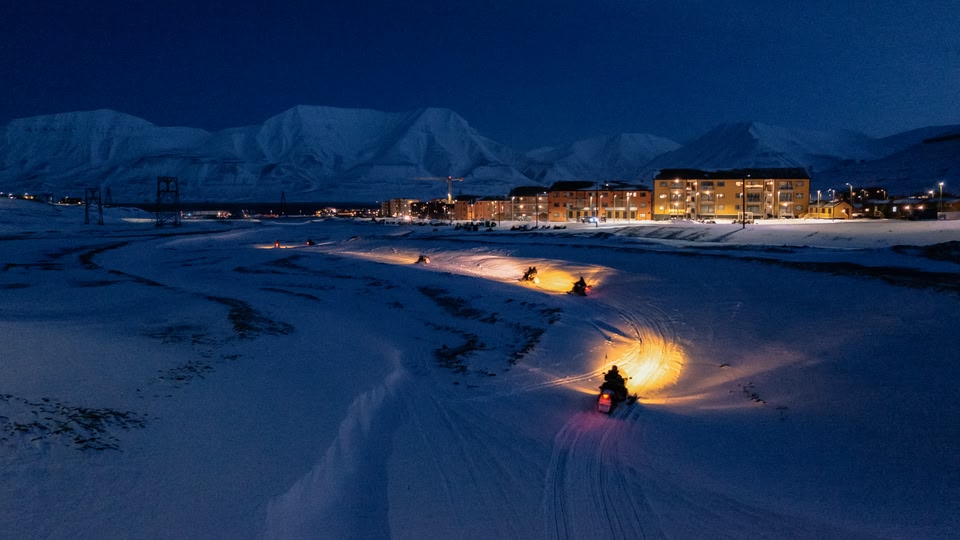
Svalbard’s unreal landscapes are the perfect setting for thrilling adventures. You could be hiking through a vivid blue ice cave one moment and riding a snowmobile to a glacier or dog sledding through the snow the next. Due to extreme conditions (and the risk of encountering polar bears), it’s best to book a guided tour to explore beyond Longyearbyen.
Things to do in Svalbard
Top attractions
Travel through Adventdalen in search of the Northern Lights, which dance over Svalbard from late September to mid-March. Or make your way to glaciers like Longyearbreen and explore the otherworldly interior of an ice cave. Whether by snowmobile or dog sled, take some time to glide through Svalbard’s Arctic valleys like Adventdalen and Bolterdalen.
Beaches
Longyearbyen offers a small seaside spot with a barbecue area, but most of Svalbard’s beaches are wild, rocky and hard to reach without a boat. Luckily, scenic cruises and boat tours let you experience the coastline up close, from sweeping fjords to icy glaciers. If you are desperate for a plunge in the polar waters, choose a trusted tour operator who can help you do so safely.
Nature
Svalbard’s epic scenery transforms with the seasons. In winter, snow-capped peaks and vast tundras are bathed in the immense darkness of Polar Night. In summer, the snow melts to reveal lichens, mosses and wildflowers, ideal for guided mountain hikes. Svalbard is one of the few places to see polar bears in the wild — take a boat tour for the best chance of a sighting.
Cuisine
One of Svalbard’s most popular meats is ‘ptarmigan’, a bird known for its gamey flavour. Look out for other local specialities like reindeer, Arctic cod and seal on menus at the restaurants in Svalbard. In Longyearbyen, fine-dining hotspots showcase classic Nordic flavours alongside impressive Arctic views. There’s also a surprising range of international options, from tacos and pizza to sushi.
Culture and museums
One of the most fascinating museums in Svalbard is Pyramiden, a Soviet mining outpost established in the 1920s after coal was discovered. Today, the eerie ghost town offers a unique glimpse into this period. Don’t miss the Svalbard Museum in Longyearbyen for an overview of the archipelago’s history, from scientific exploration to coal mining and whaling.
Nightlife
The nightlife in Svalbard is limited to Longyearbyen. The town is home to a handful of bars and gastropubs, whose warm atmosphere attracts locals and visitors alike, especially during the long polar winter. For a unique experience, drop by Svalbard Brewery, the world’s northernmost brewery, to sample craft beers made from Arctic glacier water.
Find the best time to visit Svalbard
Weather in Svalbard through the year
March – May: Snow blankets the region, and temperatures are below freezing. But hours of daylight shift from near-constant darkness in March to 24-hour sun in late April.
June – September: The snow melts, but temperatures rarely climb above 7°C — and coastal winds can make it feel colder. Under the Midnight Sun, daylight lasts around the clock until late August. This is prime time for wildlife sightings and exploring Svalbard’s landscapes by boat, as the archipelago is at its most accessible.
October – February: From mid-November to late January, the Polar Night covers Svalbard in 24 hours of darkness. A few weeks either side is the ‘twilight season’, when the sun is below the horizon but its light illuminates the sky. Temperatures rarely get higher than −11°C.
Events in Svalbard
Sun Festival Week (March): Celebrate daylight’s return after four months of night with the ‘solfestuka’ celebrations. On 8 March, locals gather to watch the sunrise, followed by a week of cultural events and concerts.
Taste Svalbard (October): Experience the flavours of the Arctic at the world’s northernmost food and drink festival. You can expect plenty of fresh seafood on the menu, as well as reindeer sausages, seal meat and Arctic cheese.
Dark Season Blues (October): Lovers of blues, jazz and soul music head north for this annual festival. Held during Svalbard’s ‘twilight season’, when the sun’s low position in the sky bathes everything in an inky-blue light, it’s a music festival like no other.
Know before you go
Budget
Exploring Svalbard on a budget isn’t impossible. Save money by looking for tour deals and staying in budget accommodation. A cheap meal is around 210 Norwegian kroner (kr), while a beer or coffee costs less than kr70. A short taxi ride around Longyearbyen is about kr60.
Health and safety
Polar bears roam Svalbard, and strict laws are in place to protect both them and visitors. For this reason, it’s highly recommended that you don’t leave Longyearbyen’s town limits without an experienced guide. Guides will also help you navigate the region’s unpredictable weather. Frostbite can be a serious risk, so dress for the cold. Even in summer, you’ll want a windproof jacket and several woollen layers.
Free things to do
Stroll along Longyearbyen’s shoreline, but turn back when you see the polar bear warning signs. Entry to Nordover art centre is free, and under-18s also enjoy free admission to the Svalbard Museum. Don’t miss the Spitsbergen Artists Center, where you can browse local crafts at no cost — though souvenirs may tempt you.
Family friendly
There’s nothing like gliding through the wilderness behind a team of huskies — many tours even let you try your hand at mushing. Prefer to stay on foot? Guided hikes offer chances to spot Arctic foxes and reindeer. Families with kids aged 12 and up can also explore Svalbard’s past on tours of abandoned mines, old mining towns and expeditions that once set out for the North Pole.
Getting around Svalbard
Public transport
Buses: A shuttle bus runs to and from the airport to coincide with the handful of arrivals and departures each day. It stops at every hotel and guesthouse in Longyearbyen. Up to two children travel free when accompanied by a parent or guardian.
Domestic flights
You’ll reach Svalbard by flying from either Oslo or Tromso, with both Scandinavian Airlines and Norwegian offering regular service. Svalbard Airport, just outside Longyearbyen, is the region’s only commercial airport. There are no scheduled passenger flights within the archipelago, so all travel beyond Longyearbyen is by boat, snowmobile or guided tour.
Driving and car hire
Taxis are available to help you travel to and from the airport, get around Longyearbyen and even take a tour of the town. You can hire a car, but note that roads don’t extend far outside Longyearbyen or connect to any other settlements. Longyearbyen is small enough to walk around, or you can rent bicycles from the Tourist Information Office for a small fee. Snowmobiles and ATVs can also be rented, but you’ll need to show a valid driving licence. Most tour guides will pick you up from your hotel, making transport a non-issue.