Your guide to Fes
Fes highlights
An ancient medina
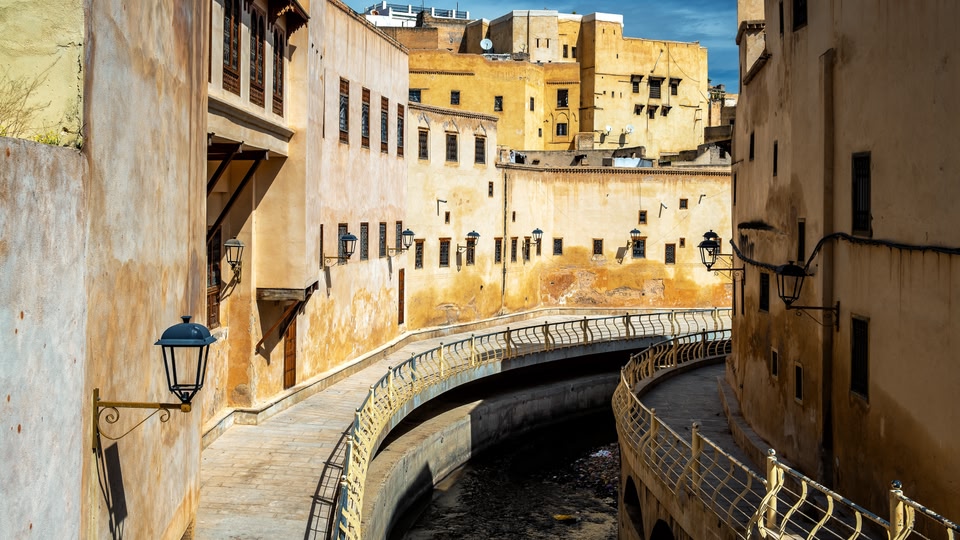
Fes el-Bali is one of the best-preserved medieval cities in the world. It’s a maze of around 9,000 streets where getting lost is entirely the point. Stroll past centuries-old mosques, artisan workshops and fragrant spice stalls. Don’t be surprised if you see the occasional donkey — they carry goods through the streets and have the right of way.
Artisan legacy
Fes has been an artisanal centre for centuries, and the proof is everywhere. Leatherworkers, coppersmiths, weavers and ceramicists still practise their trades in the same quarters they always have. At Chouara Tannery, stone vats filled with dyes create one of the city’s most iconic scenes. Fresh mint is often offered to visitors to mask the powerful smell.
Architectural wonders
The 14th-century Bou Inania Madrasa is renowned for its zellige tile work, intricate stucco and carved cedarwood ceilings. Nearby, Al-Attarine Madrasa showcases equally impressive craftsmanship within a serene courtyard. Together, they represent just part of Fes' architectural wealth, which also includes grand city gates, ancient hammams and historic synagogues scattered throughout the medina.
Fes: Know before you go
| Language | Arabic, Amazigh |
|---|---|
| Currency | Moroccan dirham (د.م.) |
| Time zone | UTC+1 (WEST) and UTC+0 (WET) |
| High season | March - May and September - November |
| Low season | January - February |
Find the best time to go to Fes
Weather in Fes
March – May: Spring brings warm days and cool evenings, perfect for long walks through the medina. Rain is possible throughout the season, though the skies generally clear up by May.
June – August: Fes bakes in summer, the hottest and driest time of year. Beat the heat by sightseeing early in the day or later in the evening.
September – November: The high summer temperatures begin to drop in September. Rain can pick up from October, but it rarely disrupts a full day of exploring.
December – February: Winter may be cooler and wetter with occasional cold snaps, but it does have its rewards. The major sights are quieter, and hotels tend to drop their prices.
Events in Fes
Fes Festival of World Sacred Music (May or June): Sacred music from across the globe is performed at some of the city’s most spectacular historic venues, including the Bab Makina plaza and Jnan Sbil Gardens. Past acts have included Björk, Joan Baez and Youssou N’Dour.
Moussem of Moulay Idriss II (September): Processions, traditional music and thousands of people fill the medina’s narrow streets to celebrate Fes' founder and patron saint. The city’s biggest party is loud, colourful and unmissable.
Festival of Sufi Culture (October): Held at venues across the city, this festival celebrates Sufism, the mystical branch of Islam. Concerts, poetry readings and spiritual discussions offer insight into a tradition that has shaped Moroccan culture for centuries.
The best neighbourhoods in Fes
Fes Jdid
Built in the 13th century as an expansion of the original city, Fes Jdid feels noticeably more spacious than the tightly packed medina. Wider streets and a calmer atmosphere make it easy to explore on foot. The neighbourhood is best known for the Royal Palace, whose seven ornate brass doors rank among the most photographed sights in Fes.
Good for: Ancient architecture, history, relaxed pace
Mellah
Founded in the 15th century, the Mellah is Morocco’s oldest Jewish quarter and one of Fes' most distinctive neighbourhoods. Andalusian-style façades and projecting wooden balconies reflect the area’s unique history, whilst landmarks such as the Ibn Danan Synagogue offer insight into centuries of Jewish life in the city. The nearby gold souk is a popular stop for shoppers.
Good for: Historic buildings, shopping, Jewish heritage
Ville Nouvelle
Built by the French in the early 20th century, Ville Nouvelle offers a striking contrast to the medina’s maze of narrow streets. Palm-lined boulevards, Art Deco buildings, cafés and international restaurants give the neighbourhood a modern feel. If you’re deciding where to stay in Fez, it provides a comfortable base within easy reach of the old city.
Good for: Cafés, restaurants, cosmopolitan vibe
Things to do in Fes
Family friendly
Walk the medina’s ancient ramparts for sweeping views of terracotta rooftops and minarets. Back at ground level, sign up for a pottery class in the old city to get hands-on with a craft that has been practised here for centuries. Round off the day with a stroll along shaded pathways and past fountains at the Jnan Sbil Gardens.
Take in the culture
The museums in Fes reflect the rich cultural heritage that has earned the city its reputation as Morocco’s cultural capital. The Dar Batha Museum showcases traditional crafts and ceramics, and the Nejjarine Museum of Wooden Arts and Crafts highlights centuries of woodworking skill. Don’t miss visiting Borj Nord, a historic fortress with sweeping views over the city and surrounding hills.
Places to eat
From family-run restaurants to upmarket dining rooms, the best restaurants in Fes serve slow-cooked meals infused with aromatic spices. Try popular dishes like ‘tagine’ (slow-simmered stews in an earthenware pot) or ‘harira’ (a tomato-based soup with lentils, chickpeas and meat). And expect the city’s cafés to keep you refreshed day and night with a steady flow of mint tea.
Nightlife
Evenings in Fes tend to be relaxed. Cafés and restaurants in the medina and Ville Nouvelle stay busy after dark, whilst some hotels and upmarket venues serve alcohol. For a taste of local culture, seek out traditional Andalusian and Gnawa music performances held in restored riads, cultural centres and historic buildings across the city.
Shopping
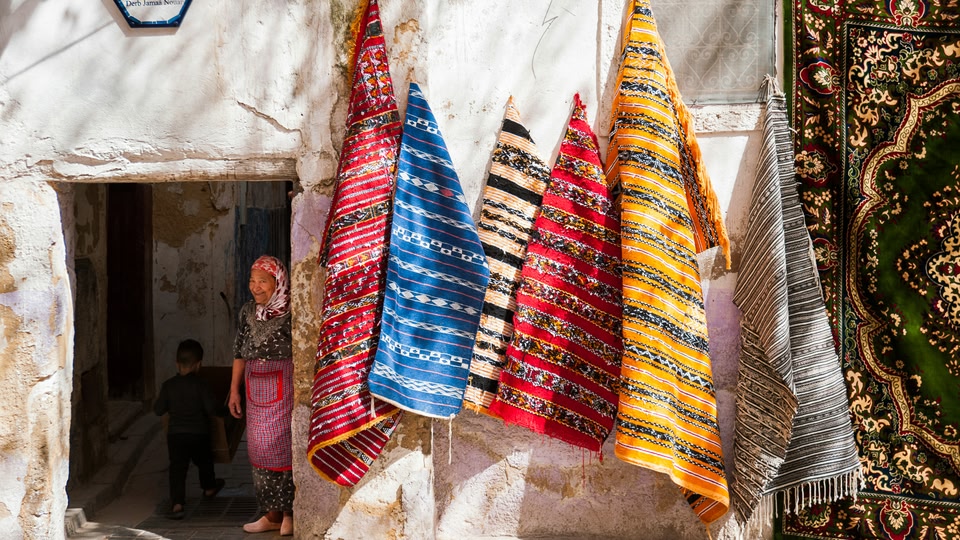
The souks of Fes are loud, colourful and packed with centuries of tradition. Stalls selling spices, leather goods, textiles and metalwork fill the medina, often grouped by trade. The Attarine souk is known for saffron, cumin and other spices, whilst the tannery district remains the best place to browse leather products. Haggling is part of the experience.
Free things to do
Many of Fes’s most memorable experiences cost nothing at all. Admire landmarks such as Bab Bou Jeloud and Borj Nord, watch coppersmiths at work in Place Seffarine and soak up the atmosphere of the medina’s busy streets. Browsing the souks, with their legendary spice stalls and displays of handmade leather goods, is an attraction in itself.
Get ready for Fes
Budget
The low cost of food, drink and transport makes visiting Fez on a budget easy. You can grab a meal in an inexpensive restaurant for as little as 30 Moroccan dirhams (MAD), whilst street food is often cheaper. Short taxi rides usually cost less than MAD 40, and a coffee will set you back around MAD 13.
Day trips from Fes
Several worthwhile day trips lie within easy reach of Fez. Meknes, a city founded in the 11th century, is around 40 minutes away by train, whilst the Roman ruins of Volubilis are known for having some of Morocco’s finest mosaics. And Azrou’s cedar forests in the Middle Atlas Mountains offer hiking trails and the chance to spot Barbary macaques.
Getting around Fes
The medina is entirely car-free, so exploring usually means covering plenty of ground on foot. Beyond the old city, red petit taxis are the quickest and most convenient way to get around, with metered fares keeping costs reasonable. Public buses connect most parts of Fes and offer a cheaper alternative, though they can be crowded during peak travel times.