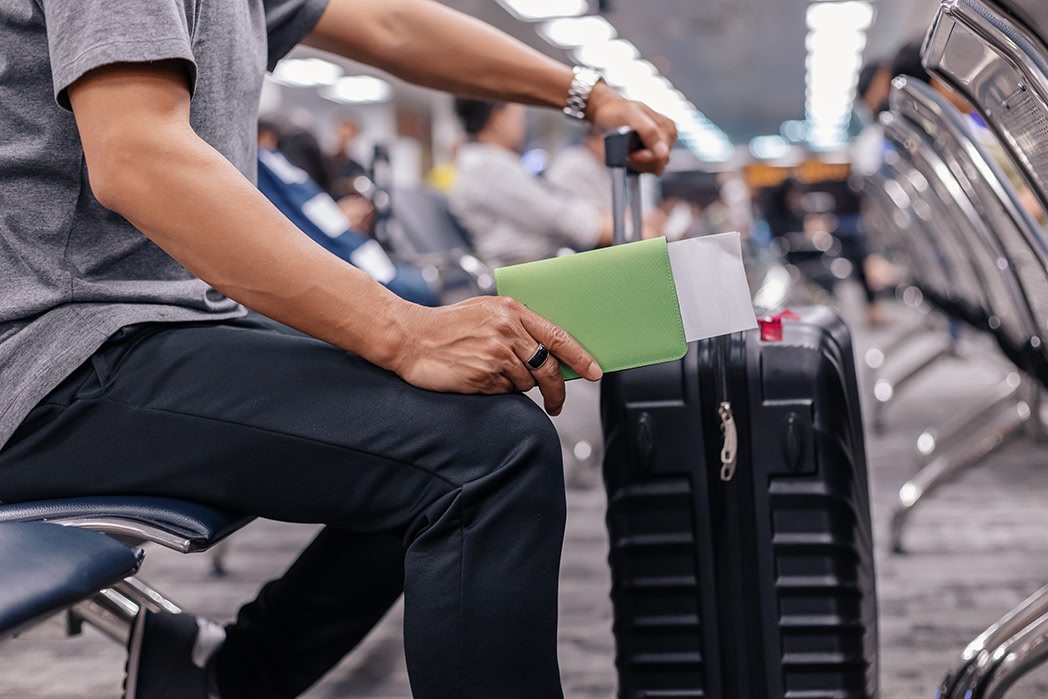
For the lucky few, flight delays can span for just an hour or two, which you can kill at the airport lounge. If the delay lasts for more than that, or even over a day, it’s a cause for concern.
This is especially hard on families who have to fork out additional budget for the whole group. For that matter, even solo travelers will feel the pinch of staying an additional night outside of Singapore.
In the event of a flight delay or cancelled flights, what should you do? There are a few things to take note of.
1. Check your coverage with your travel insurance company
Most travel insurance would cover you against delayed flights. Each insurer’s coverage, however, will vary, so you’ll have to check what you are covered for.
There are two types of insurance – either a single-trip or multi-trip insurance. With the former, you are protected against incidents from that particular leg of the trip.
Multi-trip insurance goes one step further to insure you from incidents at any point of the trip. This is especially useful when you are moving from locations to location during the insureed period.
Both forms of insurance will cover flight delays under specific conditions. For one, the delay must be for a number of hours, which usually spans from 6 to 12 hours. If your flight delays falls under that duration, you can be compensated based on the number of hours you’ve waited.
There is also a daily limit per person, so any flight delay compensation will be capped based on the insurer’s plan. With a family, this applies to every single person under the policy until the compensation amount reaches its cap.
2. Process your travel insurance claim for the flight delay
The key to handling your travel insurance claim is to make sure the following checklist is completed.
- Prepare the documents pertaining to your delayed flight, which includes your flight itinerary, boarding pass, and passport stamps.
- Contact the airline, either on-site or through the phone, to request for an official letter that confirms the flight delay and the duration.
- With both documents ready, get in touch with your travel insurance company. Most travel insurance companies are now equipped with an online platform to submit the claims with a phone follow-up.
- Besides informing them of the flight delay, also check if there are more relevant documents that are required to process the claims.
Once everything is in order, you can either take a picture or scan the documents and send it to your insurer. Or, you can take the old-school route and send it to them via mail.
Remember to keep a copy of your documents and reports, especially the receipts for cost incurred due to the flight delay.
3. Ask the airline for assistance
Most airlines will do what they can to lessen the inconvenience from the flight delay. Some might offer food and beverages for the short delay.
If the flight delay is escalated, this could result in compensation, either through cash or vouchers. Should the flight delay cause passengers to stay an extra night, airlines could potentially offer hotel stays.
The good news is that most Asian airlines, including Singapore’s national carrier, Singapore Airlines, usually provide some form of compensation under their customer service policies.
This includes providing free refreshments and meals to their delayed customers or in the form of meal allowances. If the delay is expected to last overnight, free hotel accommodations and transport might be provided too.
Should none of the above are provided, it’s still possible to be reimbursed for the costs incurred as long as it is within parameters. This requires you to file a claim with supporting documents such as receipts.
All this, however, is highly dependent on your fare’s terms and conditions, on top of the airlines’ policies.
In the worst case scenario, airlines might not offer any compensation at all. If the delay was due to circumstances within the airline’s control such as technical problems, underbooking or a late/understaffed crew.
Accommodations may not apply if the reason behind the delay was by force majeure such as:
- Natural disasters
- Bad flight weather
- Political or civil unrest
- Safety risk precautions taken by a regulating entity
- Security issues such as war or acts of terrorism
Again, this is highly reliant on your airlines. So, before signing up, remember to always read the airline’s policies regarding delayed flights, and always keep your receipts if your flight happens to be delayed.
And remember, always get a comprehensive travel insurance to safeguard yourself against such situations.
This article was first published on GoBear. Compare credit cards, insurance and other financial products based on your needs at GoBear.


